ABRSM Violin Scales Trainer

ABRSM Violin Scales Trainer Summary
ABRSM Violin Scales Trainer is a mobile iOS app in Education by The Associated Board of the Royal Schools of Music (Publishing) Limited. Released in May 2016 (9 years ago). It has 2.00 ratings with a 3.00★ (mixed) average. Based on AppGoblin estimates, it reaches roughly 3.00 monthly active users . Store metadata: updated Dec 20, 2024.
Store info: Last updated on App Store on Dec 20, 2024 .
3★
Ratings: 2.00
Screenshots




App Description
The ABRSM Violin Scales Trainer is your all-in-one companion for practising scales. The app covers all scales requirements at ABRSM Grades 1-5 from the current Violin syllabus and is also suitable for Initial Grade within Grade 1!
What does ABRSM Violin Scales Trainer include?
An extensive set of resources to help you practise your scales and learn the requirements for your Practical Grades and enhance your performance:
Practice Area
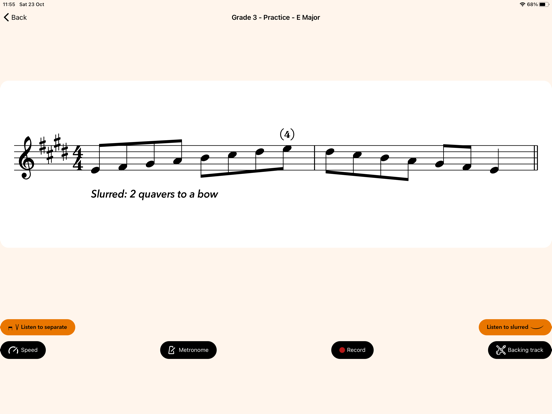
• Notation for every scale, including suggested fingering and positioning.
• Example performances of every scale, for you to compare your own playing against.
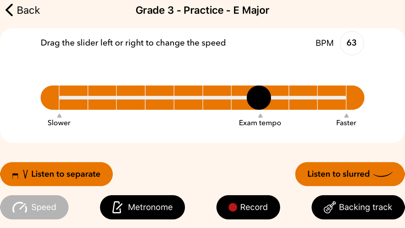
• A built-in metronome to help you see how close you are to exam tempo. Start slow and gradually build up the speed!
• A unique backing track for every scale.
Test Area
If you fancy a quick warm-up or to put yourself to the test, then the Test Area is for you! This area selects a series of scales from the requirements for you to perform. Use the record function, reflect critically and rate your performance.
Practice Meter
The more you use Violin Scales Trainer, the smarter it gets. The Practice Meter lets you see at a glance which scales you’re doing well at, and which ones need more practice.
Why Practise Scales?
Time devoted to these exercises within each practice session will improve many aspects of technique, such as co-ordination, string crossing, bow control, position changes and tone production. In addition, the sense of key and pattern acquired through familiarity with scales and arpeggios has several benefits: it speeds up the learning of new pieces, builds aural awareness, increases familiarity with the geography of the instrument, and helps develop fine intonation, evenness of line and quality of tone.