Organic Chemistry Reactions
Organic Chemistry Reactions Summary
Organic Chemistry Reactions is a mobile iOS app in Education by YOSHITAKA MATSUSHIMA. Released in Nov 2016 (9 years ago). It has 1.00 ratings with a 4.00★ (good) average. Based on AppGoblin estimates, it reaches roughly 2.00 monthly active users . Store metadata: updated Jul 26, 2024.
Store info: Last updated on App Store on Jul 26, 2024 .
4★
Ratings: 1.00
Screenshots


App Description
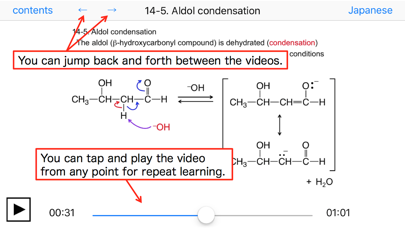
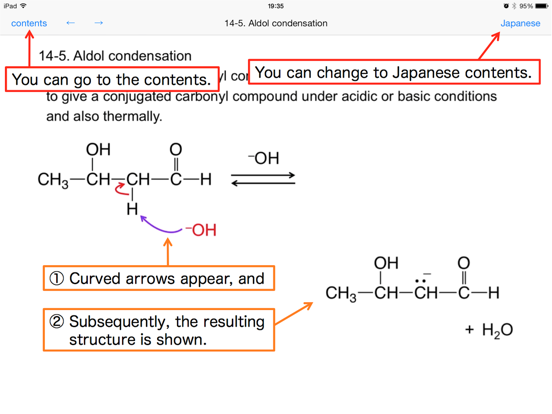
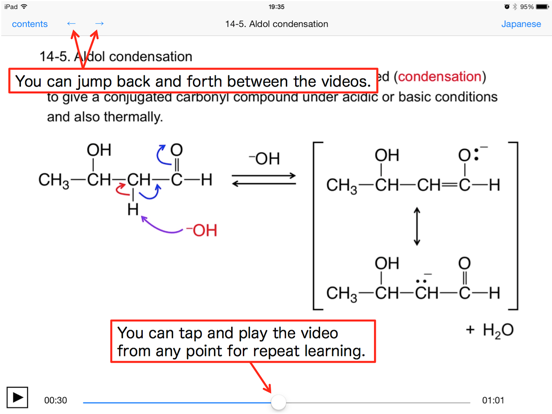
Organic Chemistry Basic Reaction Mechanism is a useful App for learning the fundamentals of reaction mechanism in organic chemistry by using curved arrows. Mastering basic reaction mechanisms is an important survival skill for students learning organic chemistry. This App contains 141 videos of materials that explain reaction mechanisms in detail using “curved arrows," which represent the flow of electrons, and is useful for acquiring basic knowledge of organic chemistry. Once downloaded, the app can be used in places without a WiFi environment, making it perfect for studying in your small pockets of time!
・You can study while listening to your favorite music, radio, etc.!
・This App allows you to learn organic chemistry by switching between English and Japanese.
・35 more videos in the latest version!
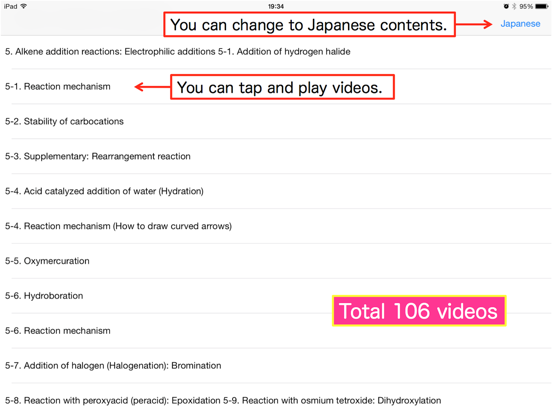
Main Table of Contents (Total 141 videos)
1. Types of arrows used in organic chemistry
2. Basic principles in organic chemistry
3. Resonance
4. Halogenation of alkanes (Radical reaction)
5. Alkene addition reactions: Electrophilic additions
6. Alkyne addition reactions: Electrophilic additions
7. Electrophilic aromatic substitution (Orientation etc.)
8. Nucleophilic substitution (SN2 and SN1) of alkyl halides (Stereochemistry, Solvent effect, Nucleophilicity etc.)
9. Elimination reaction (E2 and E1) of alkyl halides (Stereochemistry)
10. Reaction of alcohols (Dehydration, Leaving groups other than halogen etc.)
11. Ethers: Synthesis and Reactions
12. Nucleophilic addition to carbonyl group (aldehydes and ketones)
13. Esters: Synthesis and Reactions (Fischer esterification and hydrolysis etc.)
14. Enol and Enolate reactions (aldehydes and ketones: aldol reaction etc.)
15. Enolate reactions in esters (Claisen condensation etc.)
16. Michael addition (Michael reaction)
17. Robinson annulation
18. Acid and Base (Important information for discussing reaction mechanisms)