Cantonese Pronunciation App


Cantonese Pronunciation App Summary
Cantonese Pronunciation App is a Android app in the Educational category, developed by The Education University of Hong Kong. First released 3 years ago(Jul 2022), the app has accumulated 5.9K+ total installs and 22 ratings with a 4.70★ (excellent) average rating.
Recent activity: 9 installs this week (21 over 4 weeks) showing steady growth View trends →
Store info: Last updated on Google Play on Aug 5, 2022 .
4.7★
Ratings: 22
Screenshots


App Description
Practising Cantonese pronunciations and learning common Cantonese expressions.
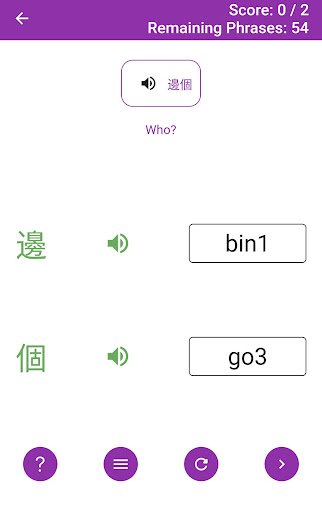
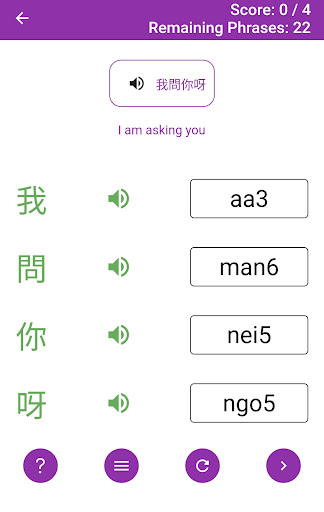
CanPro (Cantonese Pronunciation App) is a mobile language app for practising Cantonese pronunciations and learning common Cantonese expressions. In this app, users need to match the Chinese characters in a Cantonese expression with their respective romanized forms after listening to the pronunciations. The expressions of CanPro were selected, on the basis of usage frequency, from a digitized Cantonese language database with around 800,000 characters (https://hkcc.eduhk.hk/). This beta version has 99 expressions. More expressions will be added later.
The app was designed to help Cantonese learners to practise their pronunciation skills and learn common colloquial Cantonese expressions. We hope this can help learners to gain more confidence in using Cantonese in their daily life and also to integrate themselves better into the local community.
The development of CanPro was supported by the internal Knowledge Transfer funding from The Education University of Hong Kong. CanPro won a silver medal in the Geneva’s Inventions Expo in March 2021.
Developer: Dr Andy Chin (EdUHK) and Dr Patrick Chu (external collaborator)
Acknowledgement
This project was supported and funded by an internal Knowledge Transfer Fund from the Education University of Hong Kong.