Tafseer Ibn e Kaseer | English

Tafseer Ibn e Kaseer | English Summary
Tafseer Ibn e Kaseer | English is a ad-supported iOS app in Education by Akhzar Nazir. Released in Nov 2019 (6 years ago). It has 12 ratings with a 3.42★ (mixed) average. Based on AppGoblin estimates, it reaches roughly 14 monthly active users and generates around $<10K monthly revenue (0% IAP / 100% ads). Store metadata: updated Sep 9, 2022.
Store info: Last updated on App Store on Sep 9, 2022 .
3.42★
Ratings: 12
Screenshots


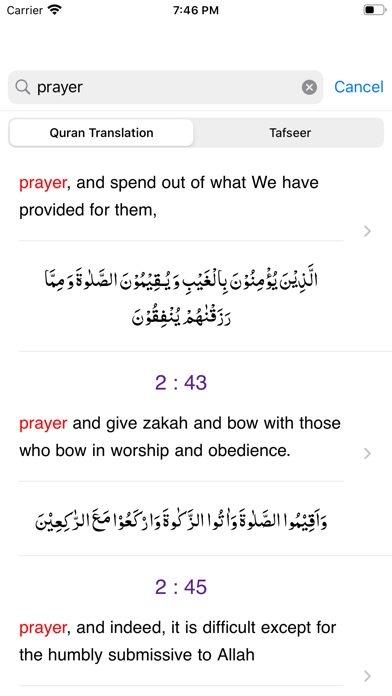


App Description
Hafiz Ibn e Kaseer wrote a famous commentary on the Qur'an named Tafseer al-Qurān al-Aẓeem which linked certain Hadith, or sayings of Muhammad (pbuh), and sayings of the sahaba (R) to verses of the Qur'an, in explanation. It is especially popular because it uses the hadith to explain each verse and chapter of the Qur'an. (Wikipedia)
Tafsir Ibn Kathir is one of the Most Comprehensive and Complete Explanations of The Noble Quran. In it one finds the best presentation of Hadith, history, and scholarly commentary. All of the authentic sayings of the Prophet Mohammad (peace be upon him) are presented in Arabic along with the diacritics. Muslims all over the world use it as a trusted source of Tafsir of the Koran and Sunnah. It is a resource that all libraries or personal collections of English Islamic books should have. We have tried to make the app best for the user to read as easy and comfortable
Ibn Kathir was renowned for his great memoery regaring the saying of Muhammad of the entire koran.Ibn kathir is known as a Qadi a master scholar of history aslo a muhaddith and a muffasir
About Author and Tafsir:
His full name was Abu l-Fida Isma IL ibn Umar ibn Kaṯiri (أبو الفداء إسماعيل بن عمر بن كثير) and had the laqab (epithet) of Imad ad-Din (عماد الدين "pillar of the faith"). His family trace its lineage back to the tribe of Quraysh. He was born in Migdal, a village on the outskirts of the city of Busra, in the east of Damascus, Syria, around about AH 701 (AD 1300/1) [9] He was taught by Ibn Taymiyya and Al-Dhahabi.
Upon completion of his studies he obtained his first official appointment in 1341, when he joined an inquisitorial commission formed to determine certain questions of heresy. [4]
He married the daughter of Al-Mizzi, one of the foremost Syrian scholars of the period, which gave him access to the scholarly elite. In 1345 he was made preacher (khatib) at a newly built mosque in Mizza, the hometown of his father-in-law. In 1366, he rose to a professorial position at the Great Mosque of Damascus.[4][10]
In later life, he became blind.[8][10] He attributes his blindness to working late at night on the Musnad of Ahmad Ibn Hanbal in an attempt to rearrange it topically rather than by narrator. He died in February 1373 (AH 774) in Damascus. He was buried next to his teacher Ibn Taymiyya.[11]
App Features: