Indian Evidence Act 1872

Indian Evidence Act 1872 Summary
Indian Evidence Act 1872 is a ad-supported iOS app in Books And Reference by Mohit Agarwal. Released in Dec 2019 (6 years ago). It has 3.00 ratings with a 5.00★ (excellent) average. Based on AppGoblin estimates, it reaches roughly 11 monthly active users and generates around $<10K monthly revenue (0% IAP / 100% ads). Store metadata: updated Nov 26, 2023.
Store info: Last updated on App Store on Nov 26, 2023 .
5★
Ratings: 3.00
Screenshots



App Description
The Indian Evidence Act, originally passed in India by the Imperial Legislative Council in 1872, during the British Raj, contains a set of rules and allied issues governing admissibility of evidence in the Indian courts of law.
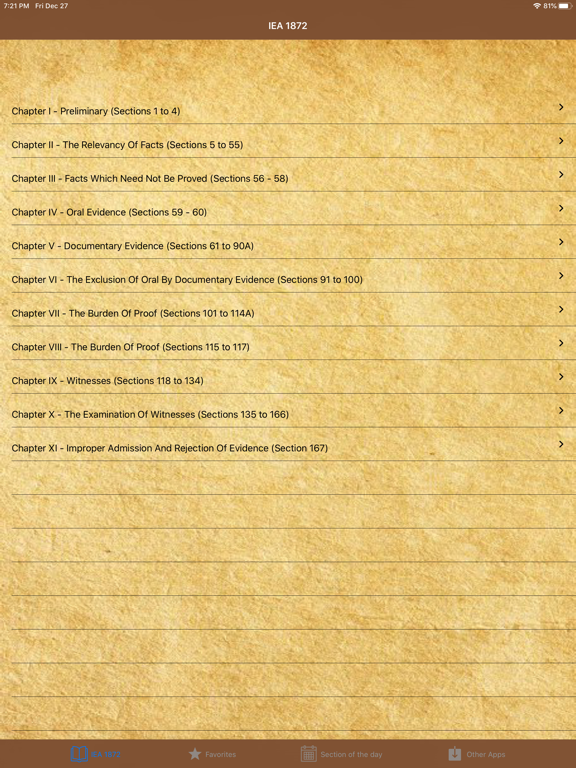
The Indian Evidence Act, identified as Act no. 1 of 1872, and called the Indian Evidence Act, 1872, has eleven chapters and 167 sections, and came into force 1 September 1872. At that time, India was a part of the British Empire. Over a period of more than 125 years since its enactment, the Indian Evidence Act has basically retained its original form except certain amendments from time to time.
Amendments:
The Criminal Law Amendment Act, 2005
The enactment and adoption of the Indian Evidence Act was a path-breaking judicial measure introduced in India, which changed the entire system of concepts pertaining to admissibility of evidences in the Indian courts of law. Until then, the rules of evidences were based on the traditional legal systems of different social groups and communities of India and were different for different people depending on caste, community, faith and social position. The Indian Evidence Act introduced a standard set of law applicable to all Indians.
The law is mainly based upon the firm work by Sir James Fitzjames Stephen, who could be called the founding father of this comprehensive piece of legislation.