NanoTubAR

NanoTubAR Summary
NanoTubAR is a free iOS app in Education by MD. USE INNOVATIONS SL. Released in Feb 2021 (5 years ago). Store last updated Dec 1, 2025
NanoTubAR SDKs Summary
App not yet scanned for SDKs.
0★
Ratings: 0
Screenshots



App Description
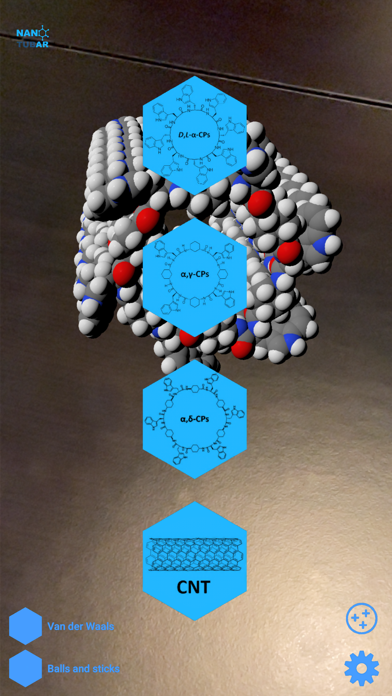
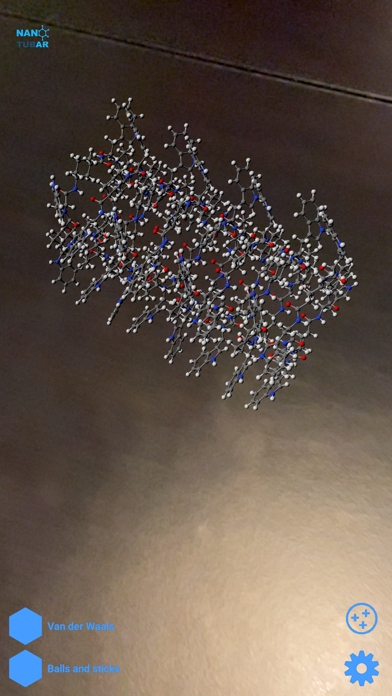
"Nanoscience" is the branch of science that is responsible for the study of objects at the nanometric scale, that is, those whose sizes are between 1 and 100 nm. One of the great challenges of nanotechnology is the preparation of new functional materials whose dimensions and structures are controlled at the molecular or atomic level. In chemistry, nanotubes are tubular (cylindrical) structures, with typical diameter sizes in the scale of a nanometer. There are nanotubes of many materials. Among the best-known are carbon nanotubes (CNT) made up of rolled sheets of carbon atoms, with physical and chemical properties that open the door to an immense horizon of applications. In addition to CNTs, there are nanotubes formed by the self-assembly of cyclic peptides. This type of nanostructures has attracted great attention from the scientific community in recent years due to their important applications in biology, chemistry and materials science. Much of this interest is related to its technological possibilities such as biosensors, photosensitive materials, antimicrobial agents, selective transport systems, molecular electronics and other potential uses in biology, electronics and optics.
The history of these nanotubes began in 1974, when De Santis predicted the formation of tubular structures by cyclic peptides, formed by alpha amino acids with alternating stereochemistry, D and L (D, L-α-CPs). However, it was not until 1993 when they were prepared in a laboratory thanks to Professor Ghadiri's group at Scripps. Their applications comprehend those that involve interaction with membranes, including the use as antimicrobials or as biomimetics of natural channels. Their hydrophilic internal cavity facilitates the transport of water and hydrophilic molecules of appropriate size, such as ions or drugs. The external properties of the nanotube are defined by the side chains of the amino acids that make up the cyclic peptide, oriented towards the outside. More recently, in the group of Prof. Juan R. Granja, at the University of Santiago de Compostela, nanotubes formed by cyclic peptides that alternate alpha amino acids with other types of artificial amino acids, such as gamma (α, γ-CPs) or delta (α, δ-CPs) have been designed and synthesized. This type of non-natural amino acids allows methylene groups to be introduced into the cavity of the channels, increasing thei