Pearl Diver: Number Line Math
Pearl Diver: Number Line Math Summary
Pearl Diver: Number Line Math is a mobile iOS app in Education by Learning Games Lab, NM State University. Released in Nov 2009 (16 years ago). It has 19 ratings with a 3.68★ (average) average. Based on AppGoblin estimates, it reaches roughly 17 monthly active users . Store metadata: updated Mar 3, 2025.
Store info: Last updated on App Store on Mar 3, 2025 .
3.68★
Ratings: 19
Screenshots


App Description
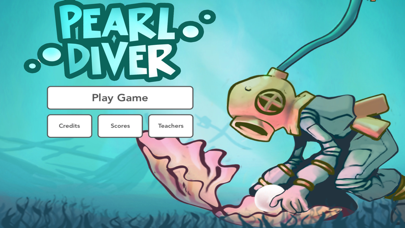
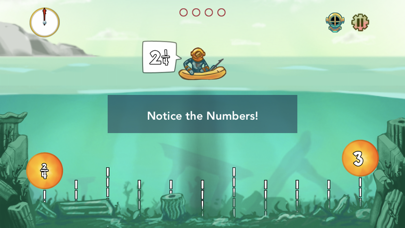
Throw on your diving helmet, and head into the depths of the sea! Master the number line, including fractions and decimals, while gathering beautiful pearls. Will you find the elusive black pearl?
• Ideal for elementary and middle school students, grades 3-8.
Developed by mathematics educators, researchers, and game developers at the Learning Games Lab at New Mexico State University. Games developed by the Learning Games Lab undergo a rigorous instructional design process, extensive user testing, and input from learners, teachers, and researchers.
Pearl Diver addresses Common Core standards relevant to the number line and properties of numbers, including:
• Understanding numbers, ways of representing numbers, and number systems.
• Understanding and representing commonly used fractions.
• Understanding fractions as part of unit wholes and as locations on number lines.
• Comparing and ordering fractions, and finding their approximate locations on the number line.
Read about research documenting learning effectiveness of Math Snacks: http://mathsnacks.com/research.html
Pearl Diver was developed as part of the "Math Snacks" initiative. Other free animations, activities, and games are available through the Math Snacks web site at http://mathsnacks.org.
Math Snack materials were developed with support from the National Science Foundation (0918794 & 1503507). Any opinions, findings, and conclusions or recommendations expressed in this material are those of the author(s) and do not necessarily reflect the views of the National Science Foundation. Some materials were originally prototyped or discussed as part of a cooperative agreement from the U.S. Department of Education (U295A050004).