Mandarin Pronunciation
Mandarin Pronunciation Summary
Mandarin Pronunciation is a with in-app purchases iOS app in Education by Clavis Sinica Limited. Released in Nov 2022 (3 years ago). Store metadata: updated Nov 25, 2024.
Store info: Last updated on App Store on Nov 25, 2024 .
0★
Ratings: 0
Screenshots



App Description
Chu Dictionary + - Mandarin pronunciation of Chinese Characters
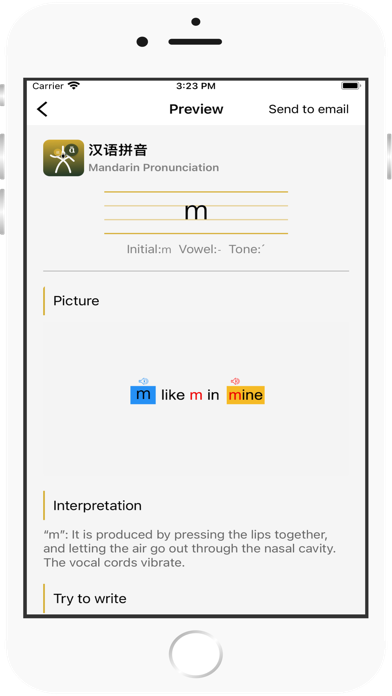
Chu Dictionary + - Mandarin pronunciation of Chinese Characters (The Mandarin Chinese Pinyin Table (汉语拼音表) )provides the complete list of all Pinyin syllables used in standard Mandarin. There are total 416 syllable and 1324 Pinyin in Chinese language if 4 tones are considered. An "0" cell on the app (Total mount: 45) indicates that this syllable is pronounced softly.
Xinhua Dictionary (《新华字典》), Xiandai Hanyu Guifan Cidian (《现代汉语规范词典》) and Modern Chinese Dictionary (《现代汉语词典》) were referenced for The Chu Dictionary +- Mandarin pronunciation of Chinese Characters.
Chu Dictionary + - Pinyin of Chinese Characters (The Mandarin Chinese Pinyin Table (汉语拼音表) ) is highly recommended by educators, students, parents and other Mandarin beginners. Chu Dictionary + is named by the surname of Dr. John Chu, which is the writer of this dictionary.
The Chu Dictionary + - Pinyin of Chinese Characters offers you:
If you are an ABC learner, you can recognize all the pronunciations of Chinese Character in several days.
If you are exercising mandarin pronunciation, this app is the best coach for you.
Chu Dictionary + offers worldwide Chinese learners a tool to learn Chinese characters, including Chinese Character strokes, Chinese Character configuration, Chinese Character component and so on. Chu Dictionary + is designed for all levels’ learner. Chu Dictionary + is named by the surname of Dr. John Chu, which is the creator of this dictionary.
Explanation of light tone, for example:
1) Auxiliary words: “的de”, “地de”, “得de”, “着zhe”, “了le”, “过guo”, “吧ba”, “嘛ma”, “呢ne”, “啊a”,”呐na”、”啦la”、”么me”、”哇wa”, such as:
吃的chīde、 轻轻地qīng qing d的、干得好gàn de hǎo、说着shuō zhe、困了kùnle、想过xiǎng guo、好吧hǎo ba、去嘛qù ma、干啥呢gàn shá ne、是啊shì a、咋办呐zǎ bàn na、走啦zǒu la、怎么zěn me、好哇hǎo wa
2) The suffixes “儿er”、“子zi”、“头tou” 和 “们men” are read softly. Such as:
一会儿yī huì er、杯子bēi zi、包子bāo zi、鸽子gē zi、辫子biàn zi、石头shí tou 、馒头mán tou 、我们wǒ men 、他们tā men 、一会儿yī huì er
3) Words