Antizuck Smart Glasses Scanner

Antizuck Smart Glasses Scanner Summary
Antizuck Smart Glasses Scanner is a mobile iOS app in Tools by Albert Pariente Cohen. Released in Jul 2026 (1 month ago). It has 44 ratings with a 4.80★ (excellent) average. Based on AppGoblin estimates, it reaches roughly 827 monthly active users . Store last updated Aug 10, 2026
Recent activity: 23 new ratings this week View trends →
Antizuck Smart Glasses Scanner SDKs Summary
App not yet scanned for SDKs.
4.8★
Ratings: 44
Screenshots


App Description
Scan locally for nearby smart-glasses Bluetooth signals and get a clear alert when a likely device is close.
AntiZuck uses your device to show active signals that may come from smart glasses, including Ray-Ban Meta, Snap Spectacles, Amazon Echo Frames, and RayNeo. It also shows repeat sightings, confidence, and rough proximity.
FEATURES
• Live signal field: likely glasses appear as blips with rough proximity and confidence
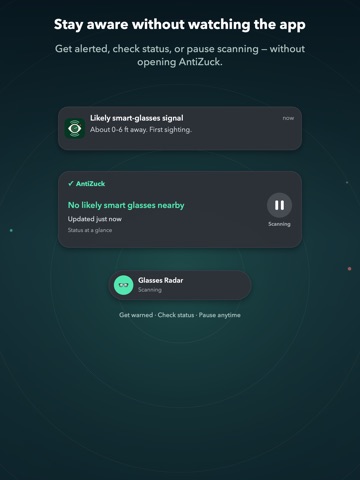
• Local alerts when a likely device starts broadcasting — even when the app is closed, when iOS permits background scanning
• Sightings history: repeat encounters, confidence, distance, and why each signal was flagged
• Add familiar glasses to Your Circle with custom labels, optional relationships, and per-device alert controls
• Show rough proximity in feet or meters
• Snooze alerts for an hour or the evening, right from the notification
• Home Screen and Lock Screen widgets with the latest status and a pause button
• Control Center toggle to pause or resume scanning, assignable to the Action Button
• No account, no ads, completely local and private
Privacy stays local. The app does not identify people, record audio or video, track location, or upload signal history. Detection is best-effort and depends on what nearby devices advertise over Bluetooth. Smart glasses mostly broadcast at power-on, pairing, and case-open, so coverage is opportunistic.