Images Of Disease

Images Of Disease Summary
Images Of Disease is a with in-app purchases iOS app in Education by The University of New South Wales. Released in Nov 2013 (12 years ago). It has 3.00 ratings with a 5.00★ (excellent) average. Based on AppGoblin estimates, it reaches roughly 5.00 monthly active users and generates around $<10K monthly revenue (100% IAP / 0% ads). Store metadata: updated May 22, 2026.
Store info: Last updated on App Store on May 22, 2026 .
5★
Ratings: 3.00
Screenshots
App Description
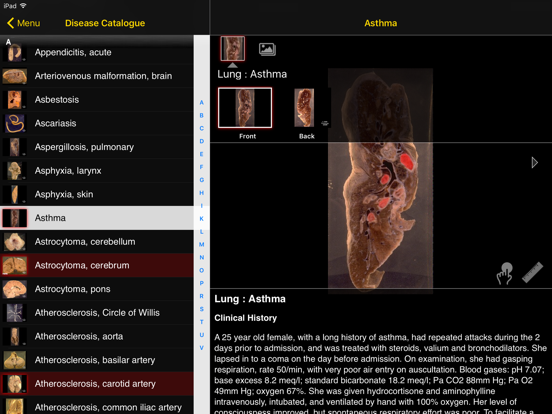
Knowledge of disease processes and their effects are essential for all medical practitioners. The Images of Disease (IOD) app is a unique educational development by staff of the Department of Pathology and Museum of Human Disease in the School of Medical Sciences at the University of New South Wales in Australia. The IOD app is intended to promote learning about disease processes and their effects on human tissues and organs. It provides access to images of a broad range of human diseases, including interactive images of diseased tissue to enhance understanding of the appearances of disease. The IOD app is suitable for students of medicine and medical sciences, as well as medical practitioners, specialist trainees in radiology and pathology, and indeed anyone interested in how disease affects us.
The Images of Disease collection consists of a database of thousands of images and associated clinical histories and descriptions, predominantly relating to diseased tissue held in the Museum of Human Disease at the University of New South Wales. Hundreds of diseases are covered, ranging from Abdominal aortic aneurysm to Volvulus of the small bowel. A number of interactive hotspotted images are available to enable in-depth exploration of the features of common diseases such as Myocardial infarction ('heart attack') and Colorectal carcinoma ('bowel cancer').
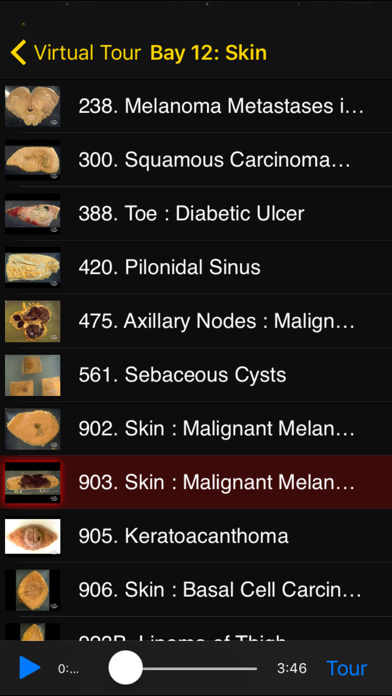
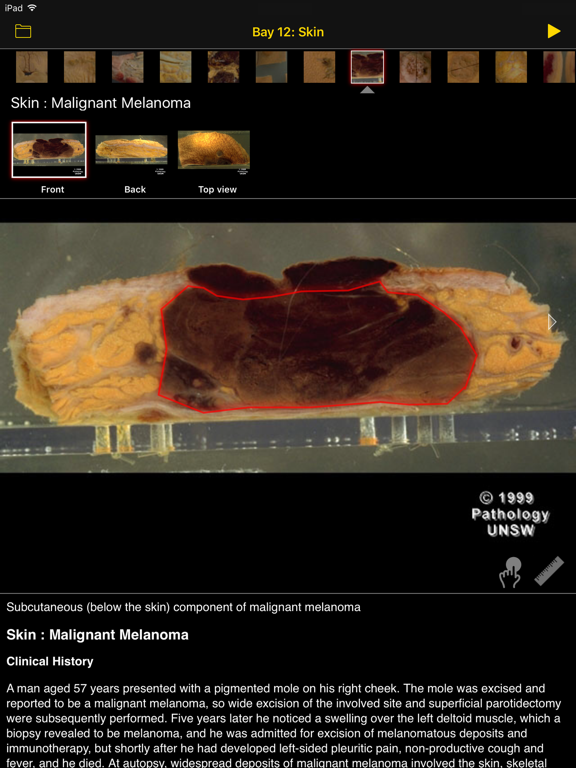
Images include macroscopic (gross pathology) and microscopic (histopathology) views of diseased tissue, sometimes with associated diagnostic imaging investigations, clinical and autopsy images. Images can be searched by disease name, organ system or pathological process. Virtual audio tours of museum specimens are also available. The free IOD Lite app contains a small selection of those images, while the IOD app contains the complete image collection.
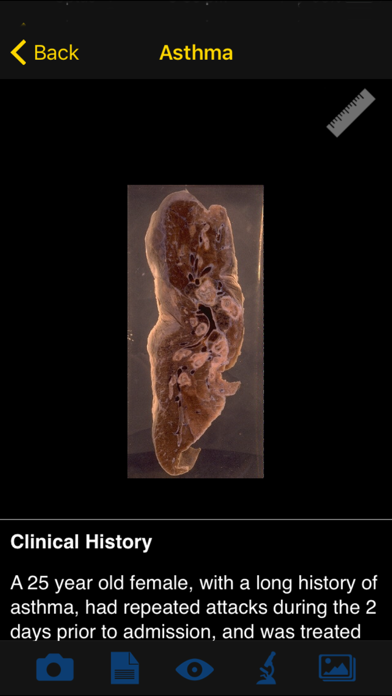
When viewing specimens, you can use two fingers on the screen to zoom in and out. You can also swipe up or down on the text field to change its size. You can also tap the ruler icon to measure the actual size of the specimen or features within the specimen by using two fingers to specify the points to measure between. When a specimen name is highlighted in red, this indicates that there are hotspots on the specimen which will display a text description and red outline after tapping on areas of interest.
Reviews:
"The IOD app is a very well-organised applicatio