Ripple Effect - Logic Puzzle


Ripple Effect - Logic Puzzle Summary
Ripple Effect - Logic Puzzle is a ad-supported Android app in Board by Stanley Lam. Released in Jan 2015 (11 years ago). It has about 1.3K+ installs Based on AppGoblin estimates, it reaches roughly 47 monthly active users and generates around $<10K monthly revenue (0% IAP / 100% ads). Store metadata: updated May 5, 2026.
Recent activity: 3.00 installs this week (12 over 4 weeks) showing below average growth View trends →
Store info: Last updated on Google Play on May 5, 2026 .
0★
Ratings: 0
Screenshots

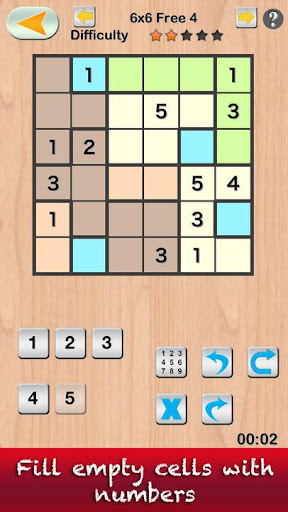

App Description
Ripple Effect - Same numbers cannot be close to each other
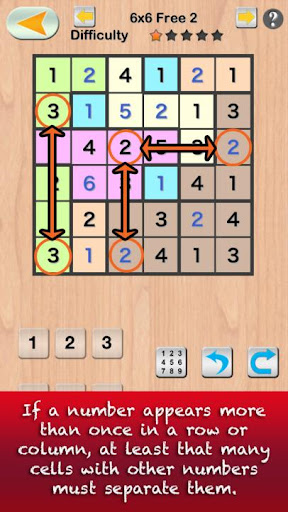
Ripple Effect is a logic puzzle with simple rules. The puzzle consists of a rectangular board divided into "rooms". Each room must be filled with each of the numbers from 1 to the number of cells in the room. If two identical numbers appear in the same row or column, at least that many cells with other numbers must separate them. For example, if two 4s appear in the same row, then they must be separated by at least 4 cells.
**** Ripple Effect features ****
# Content
- 5 different sizes of board
- 5 difficulty levels
Ripple Effect (Japanese: Hakyuu Kouka) is a logic puzzle published by Nikoli. As of 2007, two books consisting entirely of Ripple Effect puzzles have been published by Nikoli. The second was published on October 4, 2007.
Ripple Effect is played on a rectangular grid divided into polyominoes. The solver must place one positive integer into each cell of the grid - some of which may be given in advance - according to these rules:
Every polyomino must contain the consecutive integers from 1 to the quantity of cells in that polyomino inclusive.
If two identical numbers appear in the same row or column, at least that many cells with other numbers must separate them. For example, two cells both containing '1' may not be orthogonally adjacent, but must have at least one cell between them with a different number. Two cells marked '3' in the same row or column must have at least three cells with other numbers between them in that row or column, and so on.