Spot the Station


Spot the Station Summary
Spot the Station is a mobile Android app in Education by NASA . Released in Jun 2023 (2 years ago). It has about 514.3K+ installs and 5.4K ratings with a 4.72★ (excellent) average. Based on AppGoblin estimates, it reaches roughly 23.8K monthly active users . Store metadata: updated Mar 18, 2026, version 2025053016.
Recent activity: 14.2K installs this week (23.2K over 4 weeks) showing exceptional growth , and 60 new ratings this week View trends →
Data tracking: SDKs and third-party integrations were last analyzed on Mar 21, 2026. The app's network data flows (API traffic to/from the app and its SDKs) were last crawled on Nov 10, 2025.
Store info: Last updated on Google Play on Mar 18, 2026 (version 2025053016).
Spot the Station was last scanned for SDKs 2026-03-21. Below is the overview of third party companies detected in the app. The full list of raw SDKs, app permissions and unknown SDKs is available here.
 Expo
Expo JetBrains
 Sentry.io
 MapBox
 Google
 Firebase
4.72★
Ratings: 5.4K
Screenshots


App Description
Never miss a sighting of the International Space Station.
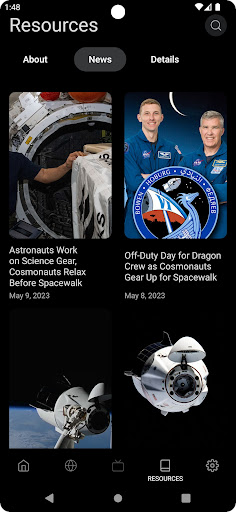
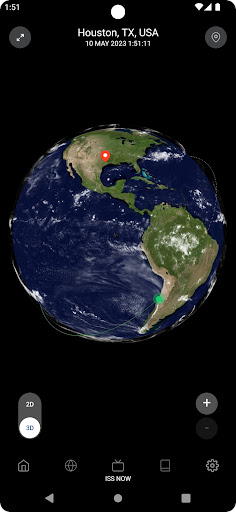
For anyone who has ever gazed up at the night sky and wondered about the mysteries of the universe, witnessing the ISS pass overhead can be an awe-inspiring moment. The Spot the Station mobile app is designed to notify users when the International Space Station (ISS) is visible overhead from their location. It aims to broaden access and awareness of the ISS and NASA globally, by providing users with an opportunity to experience the wonder of the ISS firsthand. The realization that there are human beings living and working in that tiny dot, orbiting the Earth at a mind-boggling speed of 17,500 miles per hour, is breathtaking. The app includes several helpful features including: 1. 2D & 3D real-time location views of the ISS 2. Upcoming Sighting Lists with visibility data 3. Augmented Reality (AR) view with compass and trajectory lines embedded into the camera view 4. Up-to-date NASA ISS Resources & Blog 5. Privacy Settings 6. Push Notifications when the ISS is approaching your location