Fluid Pump Power Simulation


Fluid Pump Power Simulation Summary
Fluid Pump Power Simulation is a ad-supported Android app in Tools by Gudang Simulasi. Released in May 2022 (4 years ago). It has about 645+ installs Based on AppGoblin estimates, it reaches roughly 35 monthly active users and generates around $<10K monthly revenue (0% IAP / 100% ads). Store metadata: updated Sep 16, 2024.
Recent activity: 1.00 installs this week (6.00 over 4 weeks) showing below average growth View trends →
Store info: Last updated on Google Play on Sep 16, 2024 .
0★
Ratings: 0
Screenshots


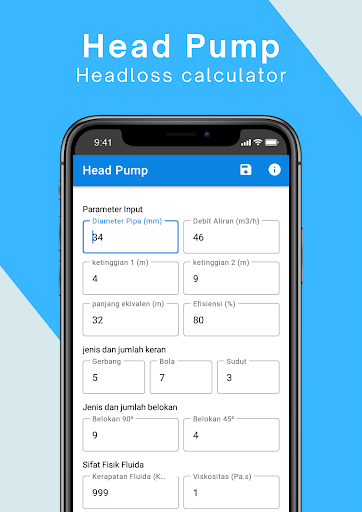
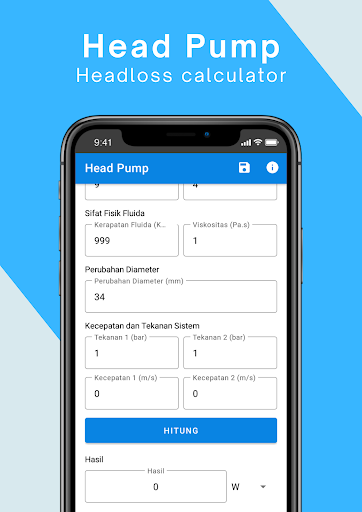
App Description
HeadPump is a powerful app to calculate headloss fluid flow efficient analysis
HeadPump is a sophisticated software designed for simulating power requirements in fluid pumps. As we know, precise and meticulous calculations are essential in hydrodynamic systems due to the numerous parameters involved and the complex mathematical equations/models. Analyzing these systems traditionally takes considerable time, depending on their complexity.
HeadPump calculates various parameters, including the Reynolds number for fluid flow classification, flow velocity, wall shear stress, energy loss due to friction along the pipeline, energy loss from valves, bends, and pipe connections, and the required pump power for the system. In this analysis, referencing tables or graphs to determine coefficient values in equation models often becomes necessary, demanding meticulous attention and time.
Technological advancements, particularly in computer technology, enable quick calculations with high precision. By employing computer programming languages, we can rapidly analyze these hydrodynamic systems.
Features:
1. Perform headloss calculations for pipelines
2. Save data to device memory for future reference."